



Wada Farms has winning formula for Colorado potatoes
Wada Farms has winning formula for Colorado potatoes
 Overall business for family-owned Wada Farms has been stable in 2025, as demand for potatoes remains steady across retail and foodservice, with particular strength in items that offer convenience and versatility.
“Some key trends we’re seeing are continued interest in regionally sourced produce, value-added potato items and stronger retailer focus on sustainability and traceability,” said Eric Beck, director of marketing for the Idaho Falls, Idaho-based company.
Challenges have included weather variability and water management in many growing regions, ongoing labor availability and cost pressures and rising input costs that require careful margin management.
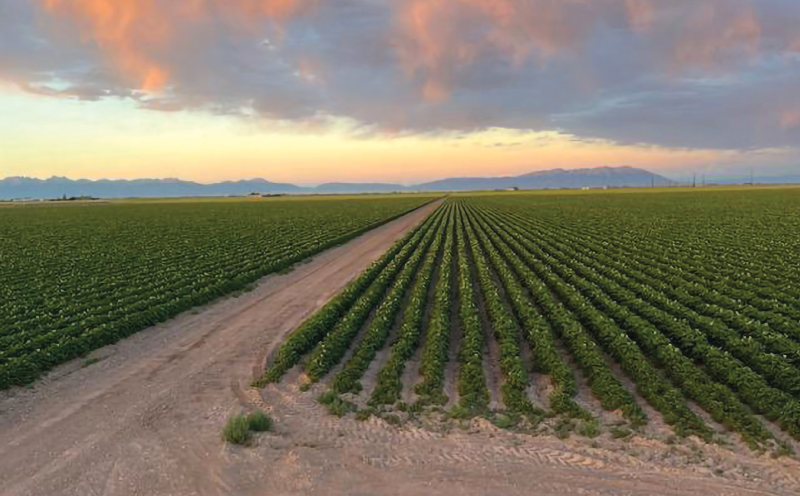
Colorado is important to the company’s overall potato production as Wada Farms grows in the San Luis Valley.
“This region offers sandy loam soils, high elevation with cool nights and a strong diurnal shift, reliable irrigation sources and lower disease pressure relative to some lower-elevation regions—factors that contribute to clean, well-conditioned tubers and excellent storability,” Beck said. “Colorado is an important piece of our year-round supply plan. It complements production from Idaho, Washington and other regions to provide continuity of supply and regional variety for customers.”
Colorado potatoes are attractive to retailers and consumers seeking regional sourcing and shorter hauling distances for nearby markets.
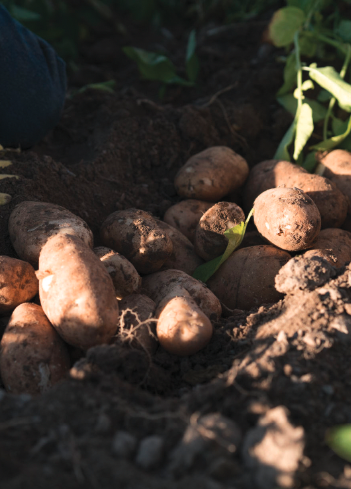
“This regionally grown option provides efficient supply chain solutions to reduce procurement volatility with relatively low food miles between shipping origin and final destination,” Beck said. “Overall quality has been strong — clean skins, uniform shape and solid pack-out for retail and processing. Volume was broadly in line with expectations. We managed supply through careful field selection and storage timing.”
For the season, Wada Farms’ size profile was diverse enough to meet the needs of retail and foodservice demand as the company had “a good middle with the bookends producing enough to fulfill those needs of the sizing spectrum.”
Wada Farms is known for its sustainability efforts and the company applies the same sustainability framework across its entire footprint, focusing on water stewardship, soil health, reduced inputs and energy efficiency.
“In Colorado, that means targeted irrigation practices, soil conservation measures and programs to improve water-use efficiency given the arid climate,” Beck said. “Region-specific work includes collaboration with local water districts and research groups on irrigation scheduling and drought-resilient practices, as well as efforts to reduce packinghouse waste and improve recycling and packaging sustainability.”
Additionally, in its Colorado operations, Wada Farms is using precision ag tools, such as soil moisture sensors, variable-rate irrigation and fertilizer and GPS-guided equipment, plus remote sensing (satellite/drone imagery) for more proactive crop monitoring.
“We also employ integrated pest and nutrient management, improved seed selections with better storability and disease tolerance and incremental mechanization in harvest and packing to improve consistency and reduce handling,” Beck said.
Wada Farms’ marketing efforts emphasize regional sourcing and the specific attributes Colorado can deliver via good storability and local availability for nearby markets.
“Educating our retail partners on the supply chain efficiencies that come from a Colorado procurement program is pivotal,” Beck said.
Over the next five-10 years, the company’s focus in Colorado will be on continued investment in irrigation efficiency, storage and logistics to protect supply against weather and water variability; broader use of precision ag, remote sensing and data-driven management to sustain yields while reducing inputs; and closer collaboration with local water districts, research institutions and retailers to align production with market needs and sustainability goals.
“Colorado will remain an important regional source in our year-round supply chain to meet the demands of industry retail and foodservice professionals,” Beck said.