From farm to table, food carries with it an inevitable time clock.
This is especially true for fresh produce, though, even processed products have a shelf life of only so long.
These natural limits, combined with systemic inefficiencies and consumer demands for perfection, mean vast amounts of food never make it to the table.
In America, nearly one third of all food is lost or wasted as it makes its way from farm to plate, according to ReFED’s 2025 U.S. Food Waste Report.
Farms account for only a fraction of this food loss. Still, even small steps can make a difference — especially when taken by those rising to the challenge in their communities.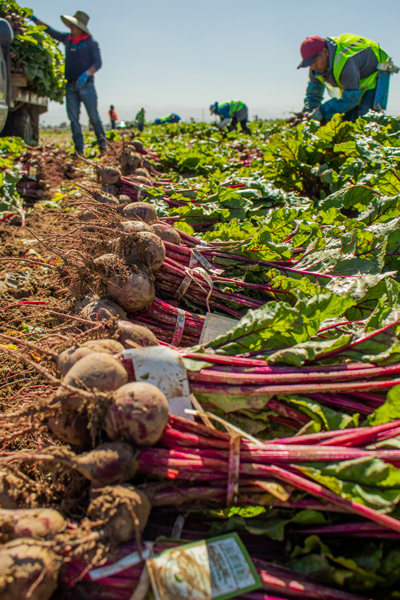
In Santa Maria, CA, Babé Farms has partnered directly with Veggie Rescue to bridge the gap between surplus produce and those in need. At a large commercial farm, even high-quality fruits and vegetables can fall short of buyer expectation. Rather than let that food go to waste, Babé makes sure it ends up where it can do the most good.
Founded in 1986, Babé is right around the corner from celebrating its 40-year anniversary, a testament to its success as a family-owned business. At the forefront is CEO and President Jeff Lundberg, alongside his mother, Judy, who remains involved in day-to-day operations as Chair of the Board.
Babé (pronounced “babe” for us non-French speakers), is known for its beautiful, eye-popping produce. Babé offers more than 60 varieties of specialty vegetables of every color of the rainbow, with clientele that includes top chefs across the U.S. and Canada.
However, Lundberg says at its core, the farm has always been a “family-style” business.
“We’re a family-owned farm. We have 250 employees, and some of them have been with us for 20, 30 years. We don’t have the turnover that a lot of agricultural companies do, and that’s something I’m proud of,” he said.
As a large-scale grower, Babé balances commercial standards with on-the-ground realities. Not every head of lettuce is the right size for a supermarket display, and not every crop can be sold before demand shifts.
For Babé, reducing waste is both practical and principled. While donating the surplus to food banks is ideal in theory, it can only move so much product, sometimes rejecting donations if they are oversupplied.


