



In the Trenches: How to avoid losing produce sales
In the Trenches: How to avoid losing produce sales

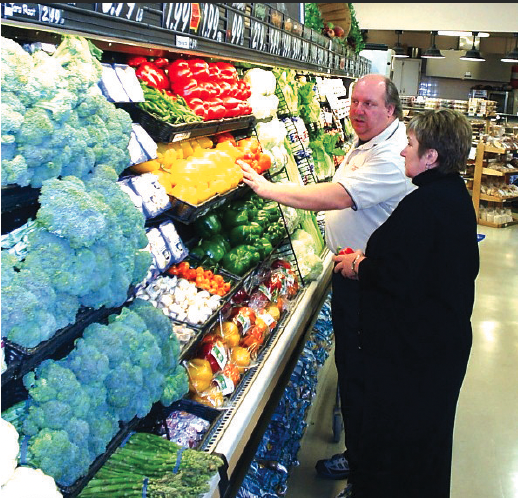 What happens when your produce sales are steadily slipping through the cracks? Who usually notices it besides you? When this happens, it doesn’t take long before your boss comes knocking on your office door for an explanation. That’s when it becomes an uncomfortable situation — trying to justify several reasons as to the causes for the lost sales.
Grocery store produce departments are up against the challenges of strong competition to keep their customers. Oftentimes, those customers get discouraged and part ways because they can’t be satisfied. So, when sales take a dive there are several factors that have initiated the change. That should be a signal to address the issues immediately.
What triggers descending sales? It’s simple — customers. There are a number of things that alienate customers, forcing them to switch to other stores. Such reasons may be unavailable ad items, out of stock displays, high prices, inadequate assortment, understaffed stores and especially department conditions that are in shambles. That’s when they decide to opt out.
Some customers are looking for product information to make their buying decisions and are often hesitant about certain produce items mainly because employees have inadequate knowledge. This is another way to lose sales.
Vince Mastromauro, produce director for Sunset Foods in Highland Park, IL, talks about a scenario of how a sale was saved from being lost. A customer asked a department staff worker about red and black plums on display. The employee directed the customer over to Mastromauro, who then recommended the black plums to the customer saying they have red flesh that is a sweeter plum. The customer hesitated, then stated, “I don’t know. Perhaps I will just skip the plums altogether.” This was the start of a lost sale and that didn’t go over too well with this produce director.
Mastromauro didn’t give up. He told the customer, “Well ma’am, we have a different variation of the black or red plums. We have red velvet apricots and plumcots. Can I offer you a sample?” She tasted both pieces of fruit, purchased those two fruits and Mastromauro prevented what could have been a lost sale.
This is a good example of how reaching out to customers in a friendly, personalized way can stop them from passing up a purchase. It’s simply called follow-up. By implementing this strategy, it will easily turn a missed opportunity into a successful sale.
Here are four reasons and solutions to address and prevent lost sales:
Reach out to customers: Ever notice a customer’s expression of puzzlement observing an item? When staff members are inattentive to them, it’s a lost sale.
First off, recognize the customers who shop the produce department. Talk to them. Ask if they need help with items they want. Build a relationship that will get that purchase from them.
Attend to out of stocks: Insufficient product supplies are lost sales. Whether items are scratched by the distribution center or there is deficient ordering at the store level, empty displays mean lost sales. Better managing of ordering and inventory can prevent out of stocks. That calls for all to be involved — growers, shippers, buyers, warehouses and stores.
Fix understaffing: Produce departments that become shopped down and are in shambles turn off customers and are instantly bound for lost sales. Labor expense and control are one thing, but an over-reduced work force weakens the system and sells less. Management is fully responsible to create a work schedule that will prevent customer frustration.
Employ technology: Failure in analyzing and monitoring product categories is another way to lose sales. In order to avoid falling into that abyss use data tools that will track and manage item movement, inventory, customer activity and other operating means to protect sales from becoming a loss. Programs using artificial intelligence are now available from technology software devices that can be placed at the fingertips of the produce manager.
The best way to prevent lost sales is to pay attention to customers while they shop and implement friendly service by helping them make purchases. Focus on all the ways to make sales rather than missing those opportunities.
Ron Pelger is a produce industry adviser and industry writer. He can be contacted at 775-843-2394 or by e-mail at ronprocon@gmail.com.